
(Image credit: GETTY IMAGES)
Pets are an important part of many Americans’ lives — and often an expensive one, too. The lifetime costs of caring for a dog can run anywhere from $16,440 to $52,075, depending on its breed, size and ongoing health conditions, according to a survey from online pet-care marketplace Cat owners can expect to cover expenses in the range of $10,725 to $61,520, with the cat’s size and life span influencing the overall costs.
Luckily, there are ways to reduce how much you spend on your pet without sacrificing the quality of their care. Try these tips to lower your costs.
Healthcare
The average cost of a veterinarian visit for a dog is $220, and for a cat, it’s $202, according to the American Veterinary Medical Association. Despite the expense, you shouldn’t skip routine vet visits, which are vital to reduce your pet’s healthcare costs in the long run. Regular checkups can help catch illnesses early and avoid expensive medical procedures, says Sarah Wooten, a veterinarian in Silverthorne, Colo. She also recommends taking preventive measures, such as ensuring that your pet exercises and eats a healthy diet in appropriate portions.
Sign up for Kiplinger’s Free Newsletters
Profit and prosper with the best of expert advice on investing, taxes, retirement, personal finance and more – straight to your e-mail.
Profit and prosper with the best of expert advice – straight to your e-mail.
During a checkup, ask your veterinarian to outline your pet’s estimated medical expenses for the year, Wooten says. That may include vaccines, dental cleanings, geriatric screening for older animals, and other medical exams and services. Wooten recommends setting aside some money to make sure you can cover these expenses, in addition to unexpected illnesses and surgeries.
Ask whether your vet offers a wellness plan that offers a bundle of discounted services, such as vaccinations and routine exams, split into fixed monthly payments, suggests Rebecca Greenstein, a veterinary adviser for Rover. Typically, you don’t have to undergo a credit check or pay interest to use one of these plans. However, they don’t include emergency veterinary needs, and not every vet clinic offers them. If you want coverage for emergencies and illnesses, you’ll need a pet-insurance policy that covers those events.

Close-up of a ginger domestic cat eating dry kibble from a food bowl at home. Concept image for pet care, healthy cat nutrition, feeding routines, animal wellness, and balanced diet.
(Image credit: Getty Images)
For some questions and non-emergency issues, you may be able to use virtual or telehealth options. At , for example, pet-food company IAMS offers a free web-chat service through which you can discuss your pet’s nutrition, well-being and behavior with nutrition advisers and licensed veterinary technicians. Pawp offers 24/7 access to veterinary professionals, who create a personalized care plan for your pet.
A yearly membership is $99 — or, if you have a Walmart+ membership, which provides free shipping from Walmart along with other perks, Pawp membership is free. (And if you charge a Walmart+ membership to an American Express Platinum credit card, you get reimbursed for it; the card is one of the honorees in our 2026 Readers’ Choice Awards.) But you should take your pet for an in-person vet appointment if it has a recurring illness or serious injury, Bailey says. Annual exams should be done in an office, too.
For affordable vaccines, check out ShotVet, an organization that offers pop-up veterinary clinics at retailers such as PetSmart and CVS. ShotVet also performs some tests, such as for heartworm disease and Lyme disease. Through its Love Care program, Petco offers free vaccines by partnering with local shelters and animal-welfare organizations.
Another alternative to visiting a traditional veterinary office that could save you money: Take your pet to a local university’s veterinary school, where students or residents provide care under the supervision of licensed and credentialed veterinarians.
Spend less on medicine. You can make moves to reduce how much you pay for your pet’s medications. When your vet orders a prescription, ask whether a generic version is available. Generic medications have the same active ingredients and achieve the same effect as a brand-name version, but at a lower cost.
Look into online pharmacies, which may offer more-affordable medications than your veterinary office or local drugstore. Use an online pharmacy that is accredited by the National Association of Boards of Pharmacy, such as GoodRx for Pets, PetMeds.com, PetCareRx or VetRx- Direct. You can check the legitimacy of an online pharmacy using the tool at the NABP’s website.
Check for discounts from the pharmacy. If you sign up for automatic shipments from PetMeds, you get 35% off your first order of eligible items and 5% off deliveries after that. Along with its online pharmacy, GoodRx for Pets offers coupons that can save you from 26% to 67% on medications that you purchase at brick-and-mortar pharmacies, such as CVS, Walgreens and Walmart.
Pet food
Post-pandemic disruptions in the supply chain and rising costs for ingredients have precipitated a steep climb in pet-food prices. Average prices for food and treats have soared by more than 20% over the past four years, according to consumer price index data from the U.S. Bureau of Labor Statistics.
Purchasing food in bulk can help trim your overall spending on it. Recently, for example, Petco sold a 40-pound bag of Purina Pro Plan Sensitive Skin and Stomach dog food for $74.98, for a per-pound price of $1.87, compared with $12.41 for a 4-pound bag, or $3.10 per pound. If you buy food in large quantities, keep it fresh by storing it in sealed containers or refrigerating it, depending on the type of food.

(Image credit: Getty Images)
Purchasing food in bulk can help trim your overall spending on it.
Participating in store loyalty programs can help you save on food and treats, too. With the free version of Petco’s Vital Care membership, you get access to members-only pricing and offers; dog and cat owners who pay $25 monthly for Premier get 10% off food purchases, $15 in monthly store credit and other benefits. If you have a membership with online pet-supply retailer Chewy ($79 annually after a 30-day free trial), you get free shipping, 5% rewards on every order, and other special discounts and offers.
Some retailers offer discounts if you sign up for automatic deliveries. Chewy, for example, gives you 5% off eligible items if you set up automatic shipments. With Amazon’s Subscribe & Save service, you’ll typically get a 5% discount on automatic deliveries of qualifying pet food, or as much as 15% if you have five or more items auto-delivered at once to your address.
If you want to take a do-it-yourself approach to feeding your pet, consider preparing meals and treats at home. For example, you may spend about $50 a month making dog food out of chicken, rice and carrots, compared with $80 to buy high-end kibble, according to pet-supply company Houndsy.
But first, consult with your veterinarian to ensure the meals won’t trigger your pet’s allergies or other chronic health conditions, advises Michael Q. Bailey, president of the American Veterinary Medical Association. You’ll also want to ask your vet for guidance on making food that’s nutritionally sound for your pet. Use a food scale to make sure you get the portions right, and follow the recipe’s storage instructions.
Toys, bowls and beds
You may spend less on toys, bowls, beds and other supplies by shopping at discount retailers, such as Marshalls, HomeGoods or Walmart, instead of pet-supply stores. Walmart, for example, recently sold a medium-size dog bed with support bolsters on the sides for $20, compared with a $45 price tag for a similar bed at Petco.
You might score free or low-price supplies secondhand on sites such as Facebook Marketplace or eBay. Items such as hard plastic crates and metal bowls are generally the safest to buy used. Soft toys, beds and plastic food bowls are more likely to carry bacteria and pet odors and to have tears and stains. Make sure to thoroughly clean previously owned items with pet-safe disinfectants, and place them in sunlight to help kill germs.
If you want to get creative, try making your own pet beds. You can find instructions on how to make them—no sewing required— here.
Training and grooming
(Image credit: Getty Images)
If you’re up for the task of training your dog yourself, you can save the expense of having a professional do it. Try free online dog-training resources, such as those from Rescued by Training and the American Kennel Club.
There are times, however, when a professional trainer is better equipped for the job. For instance, Ali Smith, a dog trainer in Westminster, Md., and founder of dog-training website Rebarkable.com, suggests that dog owners contact a trainer for a persistent problem, such as biting or ignoring commands.
A group training session with other pet owners may be more affordable than one-on-one training. Smith charges $15 to $40 per group session, while individual training classes are $50 to $80 a session. You can find a dog trainer who is certified by the Certification Council for Professional Dog Trainers or through the Association of Dog Trainers. You can also search for trainers and compare their fees on sites such as Rover and Bark.
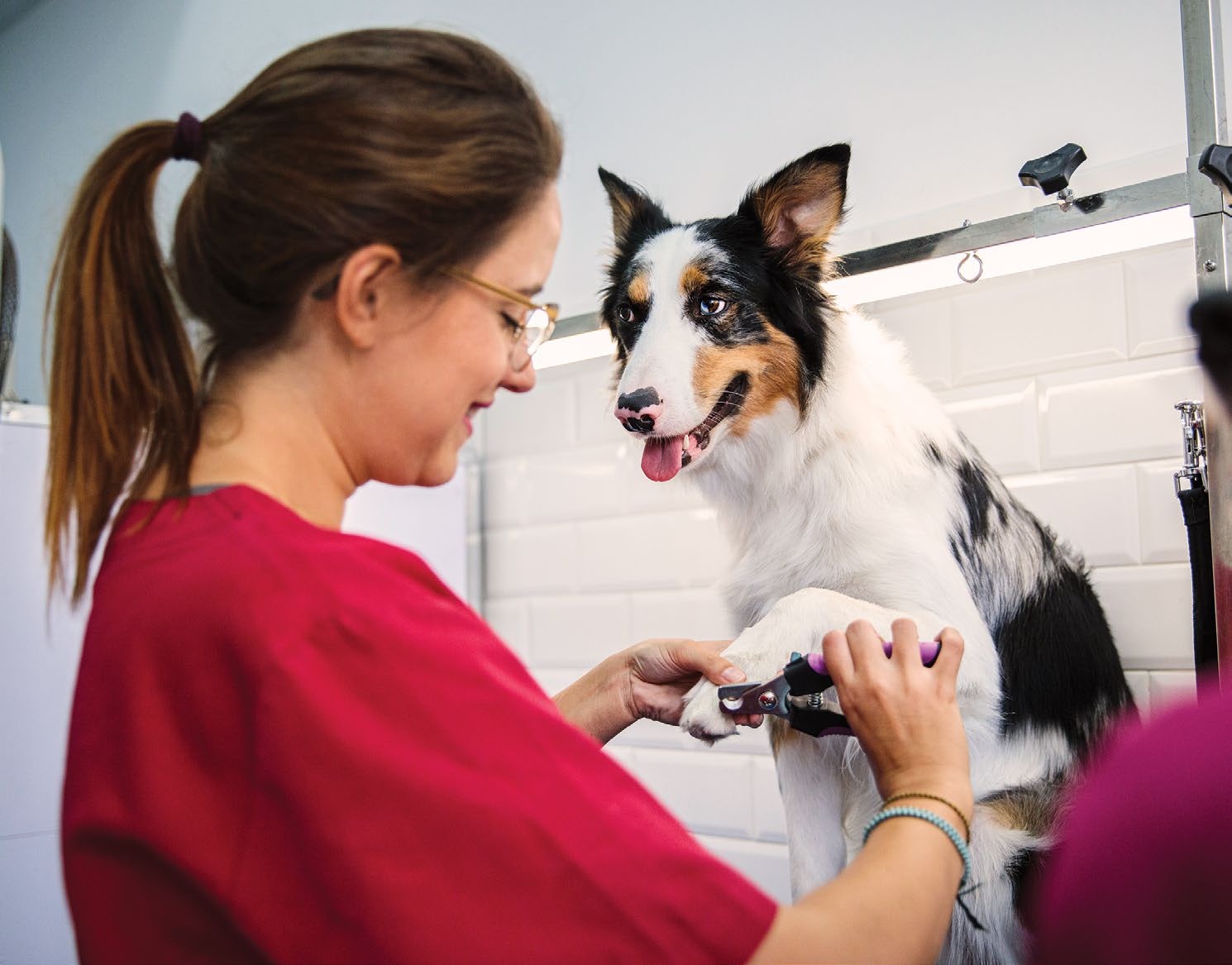
As with training, grooming can be a do-it-yourself activity for tasks such as bathing your pet, trimming its nails or cleaning its ears. But you should take your pet to a professional groomer if it has sensitive skin, skin infections or severely tangled fur, says Bailey. Professional groomers can also find parasites, ticks or abnormalities that you may miss, he says.
Dog groomers often charge from $30 to $150, depending on the dog’s size and breed and the services included. Salon dog groomers typically charge $40 to $100 per visit, while a session with mobile groomers, who travel to your home and perform services out of a van, may be in the range of $70 to $150.
Traveling
If you’re flying with your pet, keep in mind that bringing it into the airplane’s cabin with you typically comes with a fee of up to about $150. Among lodging options, some pet-friendly hotel chains, including Kimpton, Motel 6 and Red Roof Inn, don’t charge extra fees if you bring a pet.
Leaving your pet at home? See whether your neighbors who own pets are willing to form a group who can provide free pet-sitting for one another. If you need to hire a pet sitter, try looking for one on a site such as Rover.com or Wag. Sitters on these sites set their own rates, with Rover sitters charging an average daily rate of about $22 for a drop-in visit, $55 per day to pet-sit in your home or $49 daily to board a dog in their own home.
Note: This item first appeared in Kiplinger Personal Finance Magazine, a monthly, trustworthy source of advice and guidance. Subscribe to help you make more money and keep more of the money you make here.