
If you view earnings presentations as material on which to make a proxy vote over buying, selling, or holding a stock, then you’d think your only choice would be to sell Tesla (TSLA 0.84%) stock after the first-quarter earnings report. The key point is that the company ramped up its near-term capital spending plans, but CEO Elon Musk appeared to push back expectations for an early ramp-up in Robotaxi deployment.
That said, there’s a case to be made that these actions derisk the company and put it on a more stable footing from which it can now start overdelivering.
Tesla is raising capital spending
After telling investors in January to expect more than $20 billion in capital spending for 2026, Tesla increased the estimate to more than $25 billion. Moreover, there’s the future investment to consider that Tesla will make into Terafab, a vertically integrated semiconductor plant to be built in partnership with SpaceX and xAI.
Today’s Change
(-0.84%) $-3.16
Current Price
$372.86
Key Data Points
Market Cap
$1.4T
Day’s Range
$370.04 – $376.40
52wk Range
$271.00 – $498.83
Volume
2.2M
Avg Vol
63M
Gross Margin
19.07%
What Wall Street expects
While Tesla is a well-funded company with $35.5 billion in net cash on its balance sheet, Wall Street expects the remaining $22.5 billion in capital spending in 2026 to leave it with $22.3 billion in net cash at year’s end. That’s fine if Wall Street expectations for cash burn of just $1.5 billion in 2027 and then free-cash-flow generation of $3.5 billion in 2028 come to fruition.
Puts and takes
However, there are a number of questions over factors implied in those assumptions:
- Will Terafab investment, and investment in “microfactories” needed to support upgrades of Hardware 3 models get them to a condition where they can “achieve unsupervised” full self-driving (FSD)? (For context, Hardware 3 is Tesla’s first in-house custom chip designed specifically for artificial intelligence and autonomous driving.)
- Tesla’s overall sales declined in 2025. Will they grow as expected in 2026 and 2027?
- Will Tesla generate meaningful revenue from robotaxi and unsupervised FSD in 2027 in a material way, as Musk expects?
- Will revenue from Optimus, Tesla’s general-purpose robot, start building in 2027 and then scale meaningfully in 2028?
Terafab and Hardware 3 investment add to capital spending: Musk acknowledged on the earnings call that Hardware 3 models can’t run unsupervised FSD. Meanwhile, Robotaxi and Optimus delays will negatively affect earnings and cash-flow generation: “I don’t know what the production rate of Optimus will be this year,” Musk said.
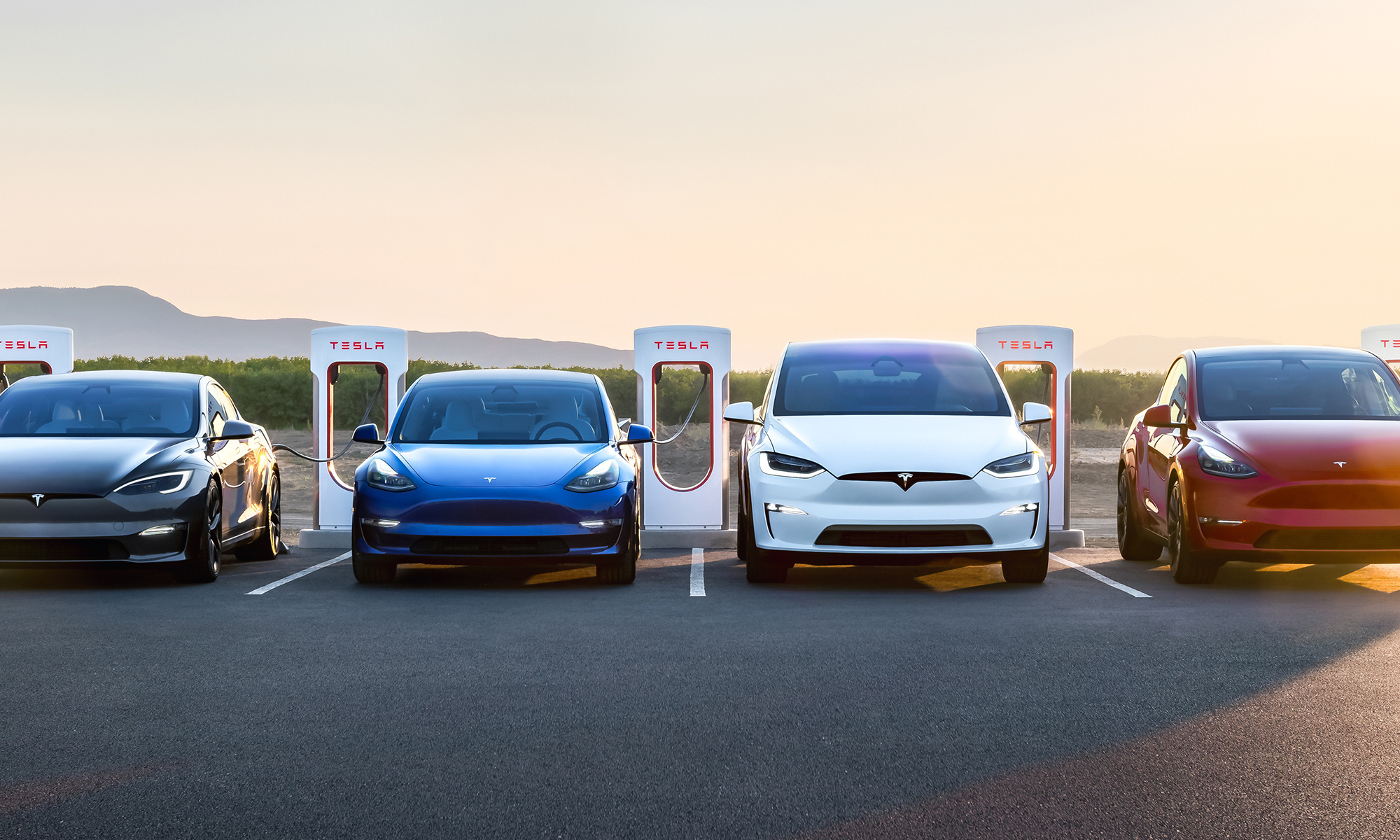
Image source: Tesla.
As for Robotaxi, Musk said he hoped to have it rolled out in 12 states by the end of the year, a far cry from covering 50% of the U.S. population by the end of 2025, as was previously hoped.
Musk also noted, “It wouldn’t be right for us to go to, like, very large-scale unsupervised FSD when we know that there are software improvements in the pipeline that would improve safety.”
All told, a formula of increased capital spending plus dampened Robotaxi expectations equals a net negative compared with where the company was before the report.
The long-term view on Tesla
However, there’s still a strong case for the stock, and it’s important to remember that growth stocks like Tesla aren’t best assessed on the minutiae of quarter-to-quarter details. The slow pace of the Robotaxi rollout is frustrating, but Musk’s comments have reset expectations, and the company could now start overdelivering rather than underperforming. In addition, the exact timing of Optimus production is less important than the midyear unveiling event, which builds interest and encourages sales in 2027 or 2028.
As for electric vehicle (EV) sales, there are already signs of recovery, and Tesla is likely to grow sales following the weak period last year with a transition to a new Model Y.

Image source: Getty Images.
As for the capital spending, Tesla can fund it. Meanwhile, investing in lithium refining, EV and energy battery production, and semiconductors is helping to derisk Tesla’s global supply chain. Cybercab and Optimus investments are non-negotiable, as they support future revenue generation.
The stock won’t suit most investors, but if you believe the Robotaxi rollout will accelerate through 2026 and 2027 and that Optimus has growth potential, the stock remains attractive for enterprising investors.